Research & Experience
Work Experience
March 2020 – February 2026: Postdoctoral Researcher, Applied Machine Learning group — Research Centre Jülich, Germany.
During this period the affiliation was shared between the Institute of Systems Neuroscience (Heinrich Heine University Düsseldorf) and the Institute of Neuroscience and Medicine (INM-7: Brain and Behaviour) at Research Centre Jülich.
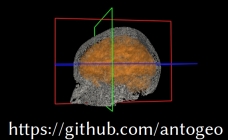
After the doctoral studies the questions around the brain drifted from "is someone there?" toward "how old is this brain?". The time spent has been shared between the many technical and sometimes unpopular sides of neuroimaging — from getting different brain scans into a shape where they can actually be compared to each other (preprocessing, normalization, quality control) to the more visible layer: machine learning applied to brain-age estimation, benchmarking pipelines and workflows end-to-end, and figuring out which combinations of features and models still behave when the datasets get bigger and messier.
The day-to-day toolkit is Python, MATLAB, and an unreasonable amount of shell scripting, alongside the usual neuroimaging stack and the libraries that keep large-scale analyses tractable. And just to keep things from getting boring, all of this runs across a range of infrastructure setups — from local workstations to high-performance and high-throughput computing clusters.
A couple of contributions sit on bookshelves as well — one on structural brain-image analysis and computational anatomy, and another on imaging approaches to measuring consciousness.
Teaching Experience
Some of this made its way into the classroom too.
Voxel-Based Morphometry and applied machine-learning basics taught to Master's students in cognitive neuroscience programs, short courses for researchers picking up ML for the first time, and — much earlier — a stretch of teaching microprocessors and digital systems in an electronics lab.